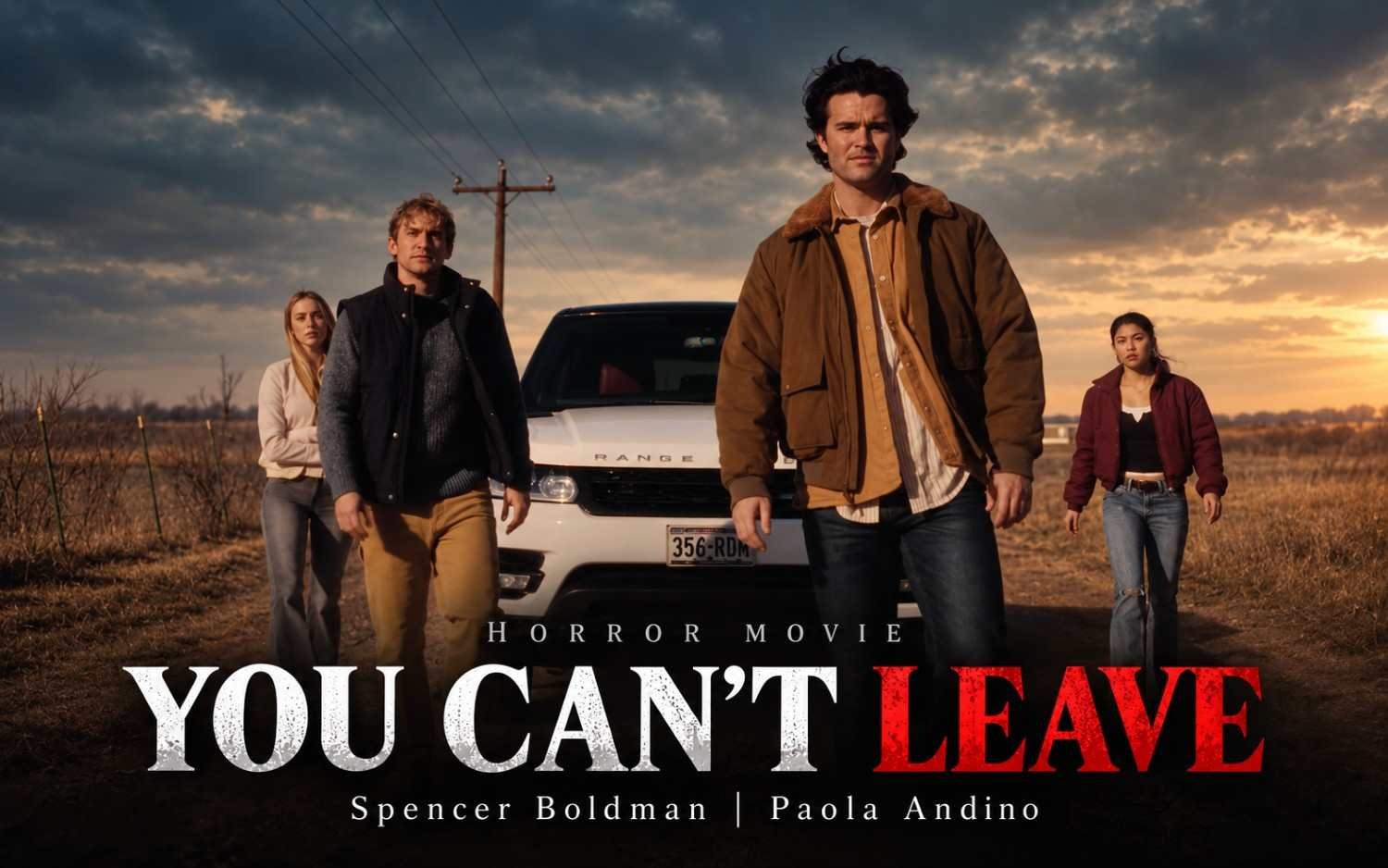
You Can’t Leave – Horror Movie | Spencer Boldman | Paola Andino
1. Movie Details
| Field | Details |
| Movie Name | You Can’t Leave |
| Director | Independent Horror Filmmaker (Production Crew TBA) |
| Lead Cast | Spencer Boldman, Paola Andino |
| Supporting Cast | Supporting Ensemble (Character Actors & Local Talent) |
| Genre | Psychological Horror / Supernatural Thriller |
| Release Date / OTT Platform | Slated for Late 2026 / OTT Premiere TBA |
| Rating | ★★★½ (3.5 out of 5 Stars) |
You Can’t Leave – Horror Movie | Spencer Boldman | Paola Andino
2. Main Content
Introduction & Overview
Psychological horror and supernatural thrillers have always held a distinct power to captivate audiences by turning familiar, comforting environments into claustrophobic traps. In recent years, independent horror cinema has shifted away from cheap, reliant jump scares toward deep-seated atmospheric dread, psychological unraveling, and intense character-driven narratives. Entering this dark, suspense-filled space is You Can’t Leave, a chilling psychological horror thriller headlined by Spencer Boldman and Paola Andino.
The film instantly builds intrigue through its central, deeply unsettling premise: what happens when a location or entity actively refuses to let its occupants escape? Built around themes of isolation, trapped memories, and escalating paranoia, You Can’t Leave aims to deliver a haunting cinematic experience. Led by Spencer Boldman—who steps away from his familiar roles to showcase a darker, more dramatic edge—and Paola Andino, who brings incredible emotional depth, the movie crafts an ominous world where the boundaries between reality, nightmare, and psychological collapse continuously blur.
Detailed Plot Summary
The narrative of You Can’t Leave follows a young couple, portrayed by Spencer Boldman and Paola Andino, who travel to a remote, secluded property seeking solitude, emotional healing, and a quiet retreat from their high-stress urban lives. Their relationship has been fractured by past trauma, and the isolated retreat promises a quiet sanctuary where they can reconnect and rebuild their lives away from daily distractions. Upon arrival, the picturesque surroundings initially offer a peaceful respite, allowing them brief moments of hope and reconciliation.
However, the tranquil atmosphere quickly turns sinister as subtle, inexplicable anomalies begin to surface around the estate. Uncanny noises in the dead of night, objects shifting without human intervention, and a pervasive sense of being constantly watched begin to erode their sense of safety. As they attempt to brush off these occurrences as mere fatigue or heightened anxiety, the phenomena grow increasingly aggressive. Terrifying visions, distorted time perceptions, and unsettling auditory hallucinations force the couple to confront the terrifying reality that something supernatural—or deeply psychological—is actively haunting the property.
Driven by rising panic, the couple decides to pack up and abandon their stay. It is at this pivotal juncture that the title’s ominous warning reveals its true weight: every attempt to leave the boundaries of the estate leads them back to where they started. Roadways loop endlessly, exit doors lead to familiar corridors, and electronic communication vanishes completely. Trapped within an inescapable spatial and temporal loop, the couple must confront not only the sinister entity tethered to the location but also the darkest secrets and emotional baggage hidden within their own relationship. As trust deteriorates and paranoia takes over, they are forced into a desperate battle for survival against an unseen force that demands total consumption.
Cast Performances & Character Breakdown
Spencer Boldman as the Male Lead
Spencer Boldman delivers a compelling, career-redefining performance that firmly establishes his capability as a dramatic and genre lead. Shifting away from his established lighter screen personas, Boldman embodies a man struggling to maintain control as his reality disintegrates. He skillfully portrays the character’s progression from a rational, protective partner to a desperate, paranoid individual unraveling under supernatural pressure. Boldman’s physical commitments during high-tension sequences and his raw emotional vulnerability bring immense credibility to the film’s harrowing ordeal.
Paola Andino as the Female Lead
Paola Andino stands out as the emotional anchor of You Can’t Leave, delivering a deeply moving and nuanced performance. She conveys visceral terror, quiet resilience, and grief with remarkable authenticity. Rather than falling into the trope of a helpless victim in distress, Andino gives her character sharp intuition, emotional intelligence, and relentless determination. Her expressive performance captures the horror of psychological entrapment, ensuring that the emotional stakes of the story remain grounded throughout the terrifying sequence of events.
Supporting Ensemble & Entity Portrayal
While the film relies heavily on its central two-hander dynamic between Boldman and Andino, the supporting ensemble—comprising mysterious local residents, historical figures in flashbacks, and ominous apparitions—provides essential narrative texture. Their brief yet impactful appearances heighten the overarching sense of isolation and dreadful history surrounding the estate. The sinister force itself is portrayed through subtle physical interactions and unsettling practical effects, making the environment feel like a living, predatory antagonist in its own right.
Direction, Screenplay & Technical Aspects
Direction & Atmosphere Building
The director demonstrates a keen understanding of horror mechanics, prioritizing slow-burn suspense over cheap, predictable shock tactics. The directorial vision focuses on spatial claustrophobia, carefully utilizing long tracking shots and static frames to make expansive spaces feel suffocatingly tight. The director effectively manipulates silence and shadow, ensuring that the audience feels the exact same creeping dread as the trapped protagonists.
Screenplay & Psychological Depth
The screenplay constructs a tight, claustrophobic narrative structure that balances supernatural mystery with emotional drama. By framing the supernatural entrapment as a physical metaphor for unresolved grief and guilt, the script adds layers of narrative depth. The dialogues are lean, realistic, and focused on building character tension, allowing the silence and atmospheric dread to carry equal weight.
Cinematography & Lighting Design
The cinematography plays a crucial role in crafting the film’s haunting visual identity. The camera work employs low-key lighting, cold color palettes, and disorienting camera angles to visually signal the characters’ losing grip on reality. Wide shots of the desolate landscape emphasize absolute isolation, while tight close-ups during night sequences heighten claustrophobia and raw fear.
Sound Design & Atmospheric Score
Sound design is arguably the film’s most potent weapon. The audio landscape mixes ambient creaks, muffled whispers, distant footsteps, and sudden dissonant musical scores to keep viewers on edge. The musical composition relies heavily on eerie string instruments and heavy low-frequency bass notes that amplify feelings of dread during pivotal suspense sequences.
Strengths & Weaknesses / Pros & Cons
Strengths (Pros)
- Exceptional Lead Performances: Strong, emotionally grounded chemistry and dramatic performances from Spencer Boldman and Paola Andino.
- Atmospheric Slow-Burn Suspense: Focuses on psychological dread, spatial loops, and eerie tension rather than relying solely on jump scares.
- Immersive Sound & Visual Design: Outstanding cinematography and disturbing sound design that make the haunted location feel terrifyingly real.
- Intriguing Psychological Premise: The spatial-loop mechanism creates a relentless sense of hopelessness and claustrophobia that keeps viewers guessing.
- Strong Emotional Core: Grounding the supernatural horror in personal relationship trauma gives the story genuine emotional weight.
Weaknesses (Cons)
- Deliberate Narrative Pacing: The slow-burn approach in the first half may feel overly patient for viewers accustomed to fast-paced slasher horror films.
- Minimalist Location Setting: Being confined largely to a single location might feel restrictive to audiences expecting expansive set-pieces.
- Ambiguous Resolution Elements: Certain abstract narrative choices surrounding the origin of the entity may leave viewers seeking explicit explanations wanting more detail.
Final Verdict & Target Audience
You Can’t Leave stands out as a chilling, well-crafted psychological horror thriller that excels through atmospheric tension, spatial dread, and standout lead performances. By combining supernatural entrapment with deeply personal relationship drama, director and cast deliver a haunting exploration of isolation that lingers long after the credits roll. Spencer Boldman and Paola Andino demonstrate impressive dramatic range, carrying the intense narrative with conviction.
Target Audience: This film is a must-watch for aficionados of psychological horror, supernatural thrillers, and slow-burn suspense movies. Fans of atmospheric, trap-based horror films like The Shining, 1408, Coherence, or Vivarium will find much to admire in its eerie setup and emotional depth.
Viewing Recommendation: Highly recommended for nighttime viewing on streaming platforms or in a dark theater setup. Turn off the lights, crank up the sound, and prepare for an immersive journey where leaving is simply not an option.