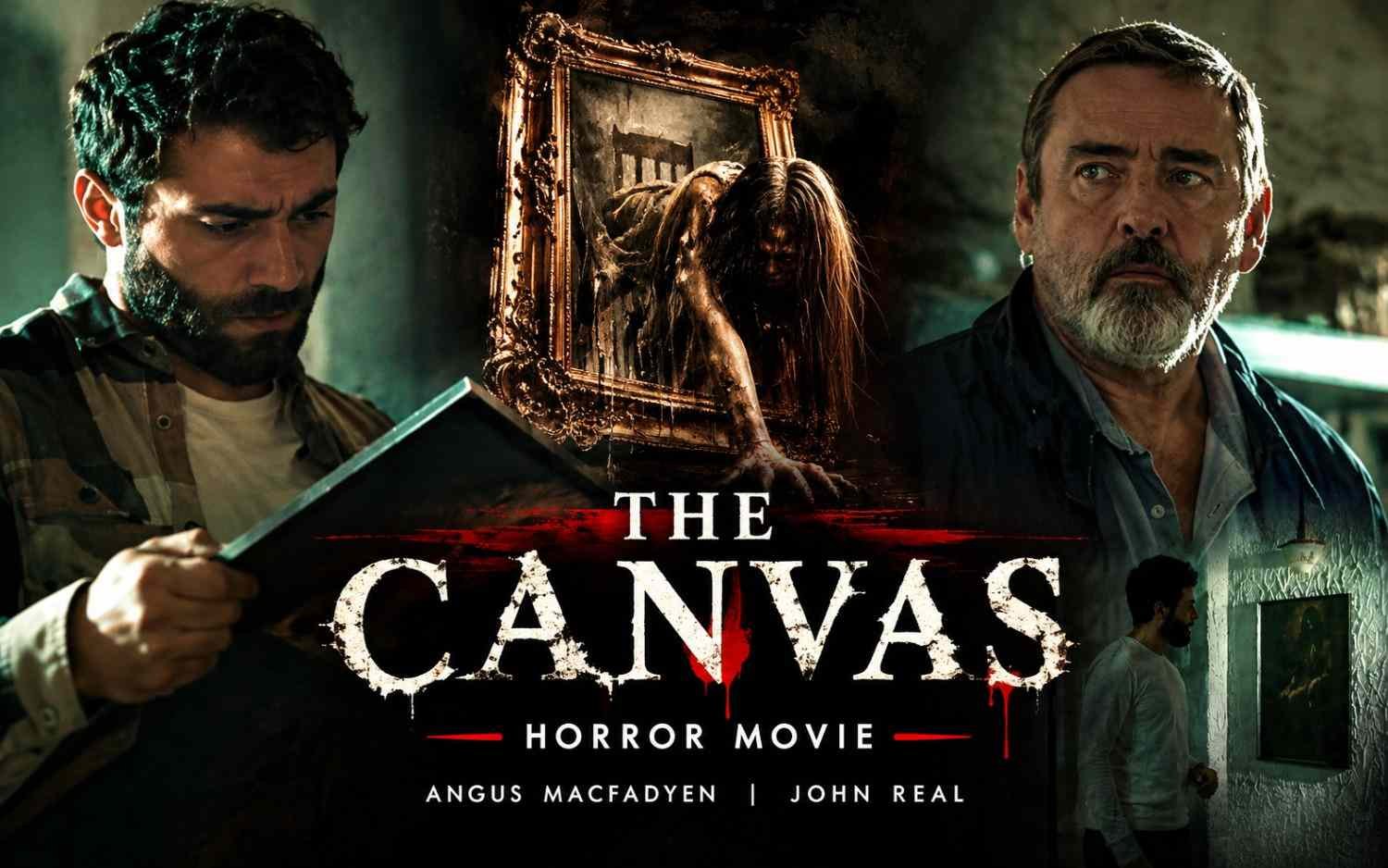
Art has long been celebrated as a window into the human soul, but what happens when that window opens directly into an inescapable abyss of psychological terror? In The Canvas, director John Real crafts a chilling indie horror experience that transforms creative expression into a conduit for nightmare logic. Moving away from predictable jump scares, the film crafts a slow-burn tale that weaponizes memory, grief, and atmospheric dread.
With compelling performances anchored by veteran actor Angus Macfadyen and multi-hyphenate creator John Real, this nightmare invites viewers into an isolated world where every stroke of paint bleeds into terrifying reality.
| Detail | Information |
| Movie Name | The Canvas |
| Language & Genre | English | Horror / Psychological Thriller |
| Main Cast | Angus Macfadyen, John Real, Nicolette McKeown, Sabrina Culver, Francesco Marzagalli |
| Directed By | John Real |
| Primary Focus | Psychological Suspense, Supernatural Possessions, & Traumatic Memories |
Dynamic Story Overview: When Art Feeds on Forgotten Trauma
The narrative opens within the creaking, shadow-drenched halls of a secluded countryside home. Here, Robert (Angus Macfadyen) and his son Daniel (John Real) attempt to rebuild their fractured lives following a tragic family loss. Their fragile quietude collapses when they uncover a mysterious, unlabeled painting hidden away inside the estate.
The artwork possesses an eerie, almost hypnotic quality. Rather than remaining static oil on fabric, the imagery subtlely shifts—mimicking the deep-seated fears and repressed guilt of whoever gazes upon it. As night falls, the boundary separating hallucination from physical reality dissolves entirely.
Daniel finds himself haunted by visions tied to the canvas, while Robert struggles to keep his own sanity intact against an ancient entity that feeds directly on buried trauma.
Deep Dive into Music & Cinematography
The technical elements of The Canvas serve as its beating heart, elevating the narrative above standard indie horror fair.
The Auditory Experience: A Score of Unease
Francesco Marchetti’s original background score avoids loud, abrasive orchestrations in favor of haunting cello solos, dissonant ambient drones, and subtle atmospheric hums. The silence in the sound design feels heavy, making every creak of the floorboards or rustle of a curtain carry visceral weight.
Cinematography & Visual Aesthetics
John Real, pulling double duty as Director of Photography, employs tight claustrophobic framing and deliberate camera movements.
- Color Palette: The film utilizes a muted, cold color palette dominated by washed-out blues, dusty grays, and decaying earth tones.
- Lighting: High-contrast chiaroscuro lighting accentuates deep shadows, leaving large portions of the screen shrouded in uncertainty.
- Camera Work: Slow tracking shots gently glide down narrow hallways, simulating an omnipresent unseen spectator lurking in the corners.
Strengths & Weaknesses: Unfiltered Critique
What Works Brillantly:
- Angus Macfadyen’s Performance: Macfadyen delivers a grounded, emotional performance as a grieving father unraveling under psychological pressure.
- Atmospheric Tension: The movie excels at building a palpable sense of dread without relying on cheap horror tricks.
- Intelligent Theme: Connecting supernatural horror with real-world emotional trauma gives the story thematic weight.
Where It Stumbles:
- Pacing Lags: The second act slows down considerably, repeating similar eerie occurrences before escalating to the climax.
- Ambiguous Climax: The third act leans heavily into metaphorical visuals, which may leave viewers wanting a more concrete resolution.
- Underutilized Supporting Cast: Talented actors like Nicolette McKeown and Sabrina Culver feel somewhat sidelined by the tight focus on the central father-son dynamic.
Public & Critic Reaction
Critical response to The Canvas highlights its commitment to psychological depth and gothic tone. Horror enthusiasts on social media and film review channels have lauded the film’s artistic direction, comparing its quiet intensity to modern indie horrors like Relic and The Dark and the Wicked.
Reviewers praise the creative collaboration between Macfadyen and Real, while some general audiences note that its deliberate pacing requires patience.
Trending Frequently Asked Questions
1. What is the official OTT release date for The Canvas?
Following its limited theatrical run, The Canvas is scheduled for digital video-on-demand (VOD) release across major platforms including Amazon Prime Video and Apple TV.
2. Is The Canvas suitable for a family movie night?
The film is rated R due to psychological intensity, disturbing surreal imagery, and thematic elements involving deep emotional trauma, making it unsuitable for younger children.
3. What does the ending of The Canvas signify?
The ending serves as a metaphor for confronting repressed grief. The sinister entity bound to the painting gains power when trauma is hidden, implying that true escape requires addressing hidden emotional wounds rather than burying them.
4. Are there any plans for a sequel to The Canvas?
While director John Real conceived the movie as a standalone psychological story, the mysterious origins of the painting leave open narrative possibilities for an anthology-style follow-up.
What genre of horror do you find most captivating—atmospheric slow-burns like The Canvas or creature features?