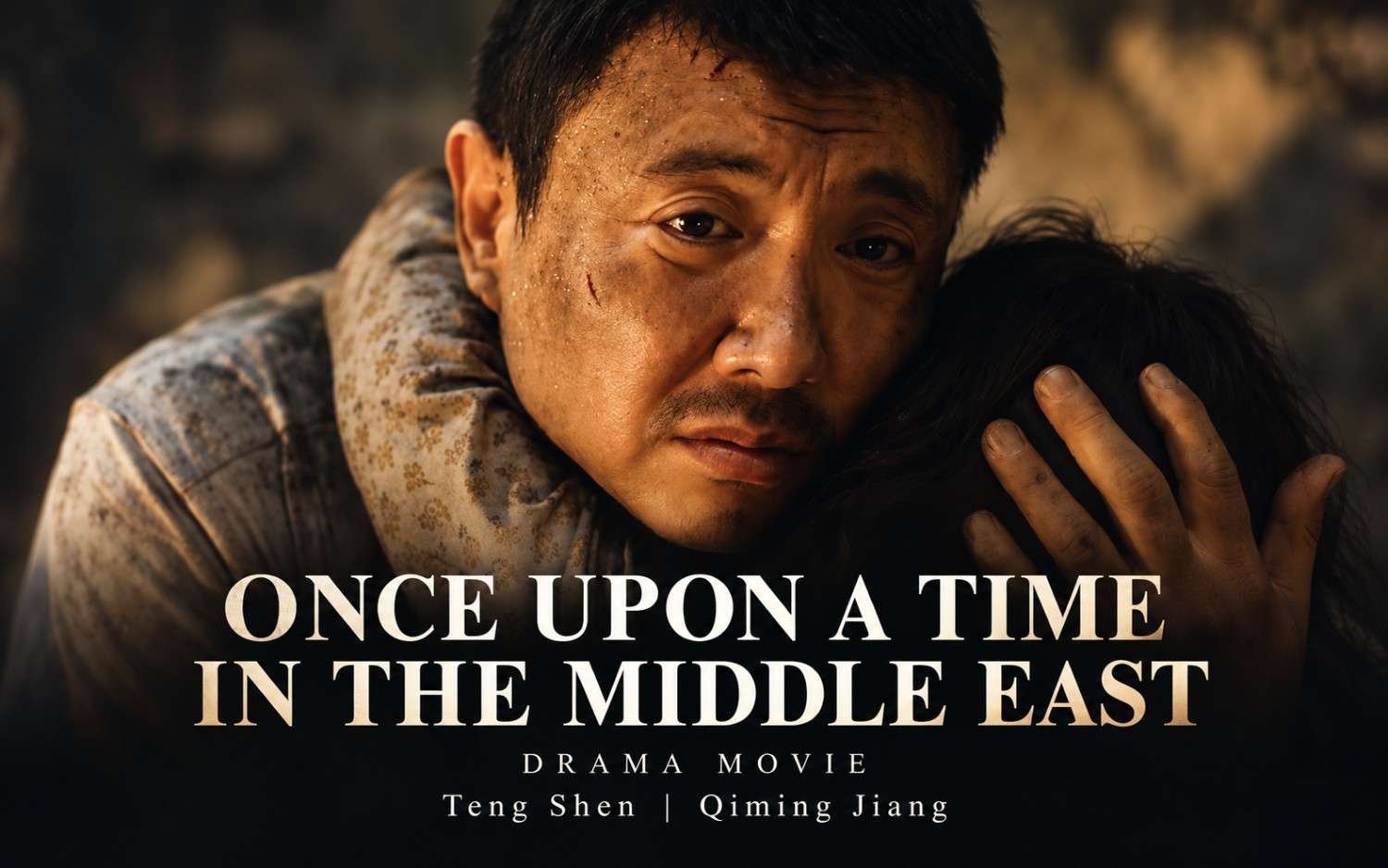
Once Upon a Time in the Middle East – Drama Movie | Teng Shen | Qiming Jiang
Movie Details
| Attribute | Details |
| Movie Name | Once Upon a Time in the Middle East (When the Smoke Clears) |
| Director | Muye Wen |
| Lead Cast | Teng Shen (as Xu Fu), Qiming Jiang (as Ma Junsheng / Little Ma) |
| Supporting Cast | Omar Sherif, Aarif Lee, and an ensemble cast of young Middle Eastern actors |
| Genre | Drama / War / Comedy-Drama |
| Release Date / OTT Platform | In Theaters October 9, 2026 (Distributed by Well Go USA Entertainment) |
| Rating | 4.2 / 5 Stars |
Once Upon a Time in the Middle East – Drama Movie | Teng Shen | Qiming Jiang
Introduction & Overview
Directed by the acclaimed filmmaker Muye Wen (Dying to Survive), Once Upon a Time in the Middle East (also known under its Chinese title When the Smoke Clears) stands out as one of the most poignant, ambitious, and emotionally resonant drama films of the year. Featuring superstar comedian Teng Shen (Dying to Survive, Moon Man) alongside the versatile Qiming Jiang, this cinematic endeavor weaves humor, human warmth, and visceral conflict into an unforgettable narrative tapestry.
Set against the volatile backdrop of a war-torn Middle Eastern city, the movie explores the extraordinary journey of an ordinary Chinese chef who attempts to maintain his culinary sanctuary, the “Loong Restaurant.” While initial marketing leaned toward Teng Shen’s classic situational comedy, the film reveals itself to be a deeply moving human drama regarding survival, fatherhood, morality, and cross-cultural empathy. As geopolitical tensions boil over, the narrative elevates beyond simple satire to deliver a powerful visual spectacle that addresses the lingering scars of war on innocent children.
Detailed Plot Summary
The story revolves around Xu Fu (played by Teng Shen), a middle-aged, pragmatic Chinese restaurateur operating the “Loong Restaurant” in a turbulent Middle Eastern city. Assisted by his energetic and anxious young manager, Ma Junsheng or “Little Ma” (Qiming Jiang), Xu Fu strives to keep his small business afloat despite growing political instability. For Xu Fu, the restaurant represents his entire livelihood and his promise to send home earnings to his aging mother and family back in China.
To overcome staff shortages and severe economic hardship, Xu Fu takes in over twenty local street children—orphans left destitute by ongoing military conflicts. By outfitting them in red uniforms and teaching them the fundamentals of running a restaurant, Xu Fu converts them into waiters, kitchen assistants, and essentially an extended family. The Loong Restaurant briefly thrives as a warm sanctuary where “The Soul of Chinese Cuisine” brings a moment of peace to locals, patrons, and children alike.
However, the fragile peace shatters when armed conflict engulfs the region. As airstrikes hit the city and paramilitary units enforce curfews, foreign forces accuse Xu Fu of harboring suspects or engaging in subversive activities. Arrested and subjected to intense interrogation by military officers who view local youths as inherent threats, Xu Fu faces a excruciating test of conscience. Despite warnings from military personnel and local authorities to stay out of foreign affairs, Xu Fu refuses to abandon the children.
As explosions destroy neighboring blocks and armed groups force street children into combat roles, Xu Fu risks his life to protect the young workers he has come to love like his own children. The narrative builds to an emotionally charged crescendo, examining whether humanity can survive when the smoke of war finally clears.
Cast Performances & Character Breakdown
Teng Shen as Xu Fu
Teng Shen delivers what may very well be the defining dramatic performance of his career. Known globally for his high-energy comedic timing, Shen demonstrates incredible emotional range as Xu Fu. He carefully balances the humorous cowardice of a man who claims to have “very little guts” with the heroic, instinctive bravery of a surrogate father fighting to protect defenseless children. His facial expressions during interrogation scenes and video calls with his mother highlight the heavy internal conflict between his desire to flee home safely and his moral obligation to stay.
Qiming Jiang as Ma Junsheng (“Little Ma”)
Qiming Jiang provides an exceptional counterweight to Shen’s performance as the high-strung restaurant manager. Jiang brings grounded nervous energy, comedic relief, and palpable vulnerability to Little Ma. His dynamic with Shen feels natural and deeply felt, particularly in scenes where the duo attempts to maintain normalcy amidst artillery fire. Jiang excels at displaying the genuine terror of a civilian caught in a warzone while holding onto his loyalty toward Xu Fu.
Supporting Cast Highlights
- Omar Sherif: Delivers a stern, authoritative, yet nuanced performance as a local Middle Eastern figure whose interactions with Xu Fu highlight the severe ideological divides created by armed conflict.
- Aarif Lee: Appears in a crucial, high-impact role that adds intensity to the military and geopolitical elements of the story.
- The Child Ensemble: The group of young Middle Eastern actors portraying the street children form the emotional heart of the film. Their genuine warmth, innocence, and tearful farewells create some of the most heart-wrenching moments on screen.
Direction, Screenplay & Technical Aspects
Director Muye Wen showcases a masterful grasp of tonal balance. Shifting from lighthearted culinary comedy to harrowing war drama requires extreme precision, and Wen handles this transition smoothly. Alongside co-writers Qunli Lang and Wei Zhong, the screenplay ensures that every joke carries emotional weight and every action sequence serves character development.
The cinematography captures both the intimate warmth of sizzling woks in the kitchen and the cold, terrifying realities of bomb-damaged city streets. The editing maintains a propulsive pace, contrasting peaceful video calls home with chaotic firefights. Furthermore, the sound design and background score elevate the narrative, using traditional Middle Eastern woodwinds and subtle orchestral strings to highlight themes of displacement, hope, and resilience.
Strengths & Weaknesses / Pros & Cons
Strengths (Pros)
- Career-Best Performance: Teng Shen transitions seamlessly from broad comedy to heartbreaking drama, proving his extraordinary depth as an actor.
- Masterful Direction: Muye Wen balances humor, suspense, and human empathy without reducing complex geopolitical conflicts to simple tropes.
- Strong Emotional Core: The relationship between Xu Fu, Little Ma, and the orphaned children provides a powerful, relatable center for the narrative.
- High Technical Quality: Outstanding set production, realistic explosive effects, and evocative cinematography create a believable setting.
Weaknesses (Cons)
- Sudden Tonal Shift: Viewers expecting a pure, lighthearted Teng Shen comedy may feel caught off guard by the dark and intense war drama of the second act.
- Pacing in the Second Act: Certain interrogation and captivity sequences slow down the narrative pacing slightly before the explosive climax.
Final Verdict & Target Audience
Once Upon a Time in the Middle East is a compelling, thought-provoking, and deeply moving cinematic achievement. Director Muye Wen and lead actor Teng Shen have crafted a film that transcends regional boundaries, delivering a universal story about human kindness amidst the horrors of war.
This film is a must-watch for fans of character-driven drama, realistic war cinema, and viewers who appreciate deeply emotional narratives like Dying to Survive or Life Is Beautiful. It is best experienced on the big screen in theaters to fully appreciate its scale, immersive sound design, and stunning visual craft.