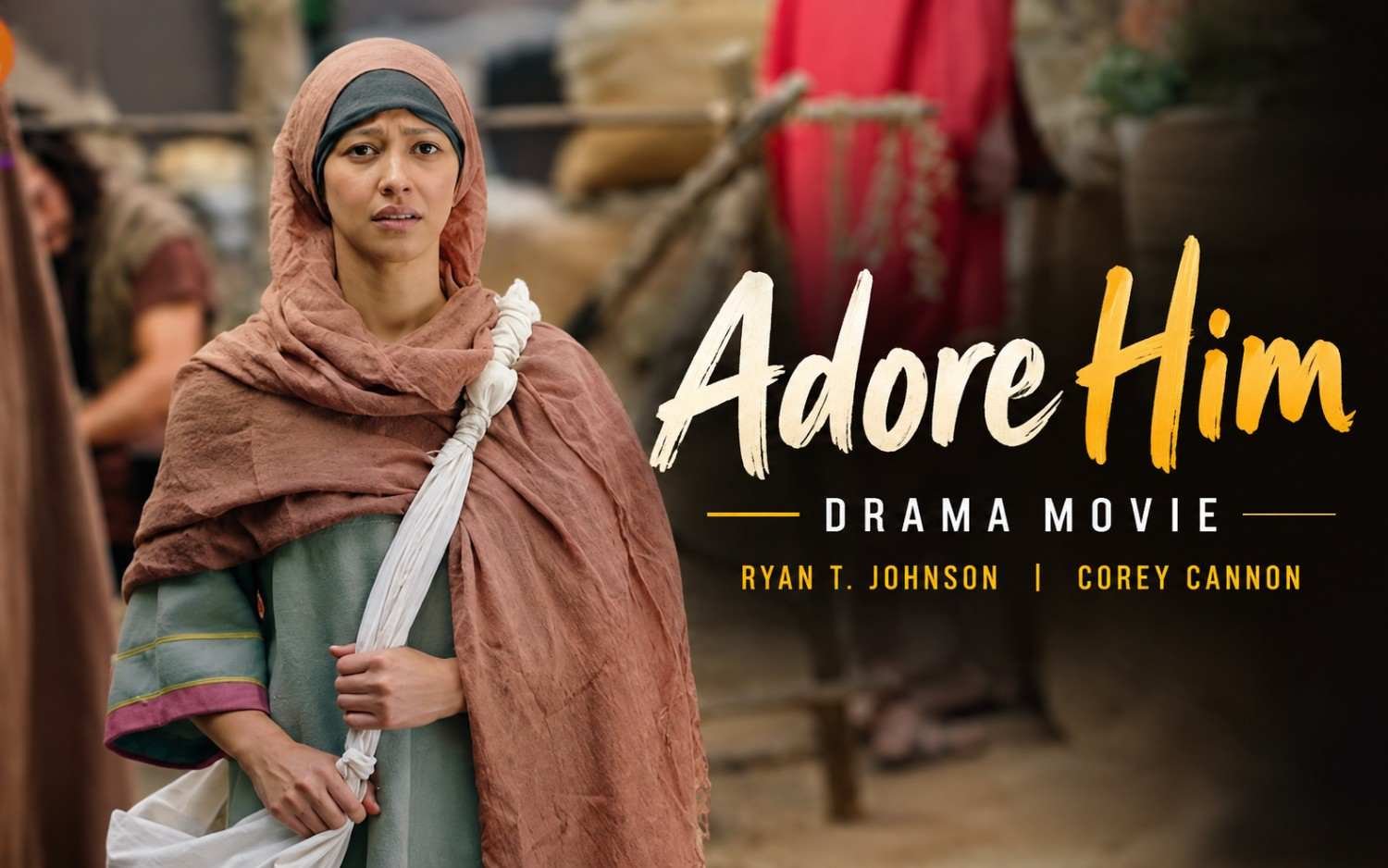
Adore Him – Drama Movie | Ryan T. Johnson | Corey Cannon
Movie Details
| Attribute | Details |
| Movie Name | Adore Him |
| Director | Ryan T. Johnson |
| Lead & Supporting Cast | Ryan T. Johnson, Corey Cannon, Tim Gray, Deacon Harold Burke-Sivers, Father Donald Calloway, Sister Inviolata, David Caro, Sarah Higgins |
| Genre | Faith-Based Drama / Documentary Narrative / Spiritual Journey |
| Release Date / OTT Platform | October 4–8, 2026 (Theatrical Event via Fathom Entertainment / Spirit Filled Hearts Ministry) |
| Rating | ★★★★☆ (4/5 Stars) |
Adore Him – Drama Movie | Ryan T. Johnson | Corey Cannon
Introduction & Overview
In an era where cinema frequently grapples with heavy social anxiety, existential dread, and psychological turmoil, faith-based films have carved out a vibrant niche by offering stories centered on hope, redemption, and spiritual healing. Adore Him, a compelling drama and spiritual documentary feature directed by Ryan T. Johnson and co-starring Corey Cannon, serves as a powerful testament to the transformative nature of faith. Distributed as a special theatrical event by Fathom Entertainment, the film arrives with significant anticipation among faith-based audiences and viewers seeking stories of personal renewal.
Adore Him explores the concept of Eucharistic Adoration and divine encounter, presenting a series of deeply personal accounts, dramatic re-enactments, and theological insights. Rather than preaching solely to the converted, the movie frames its central message around universal human struggles—specifically mental health battles, addiction, crippling anxiety, and severe depression. Initial impressions reveal a film that is visually arresting, emotionally transparent, and deeply committed to its core spiritual message, offering a cinematic sanctuary for those searching for peace amidst modern turmoil.
Detailed Plot Summary
The narrative framework of Adore Him weaves together contemporary personal testaments with historical and biblical re-enactments, focusing on the practice of Eucharistic Adoration within the Christian tradition. At its core, the film explores how ordinary individuals facing overwhelming life crises undergo profound personal transformations when encountering the divine presence.
The story highlights individuals who describe living under the crushing weight of severe mental health challenges, including chronic anxiety, deep depression, suicidal ideation, and substance addiction. When these individuals find themselves brought before the Blessed Sacrament—whether through personal desperation, curious exploration, or guided intervention—they experience an undeniable, visceral spiritual awakening. As described in their testimonies, the sensation feels as if a profound warmth fills their chest, lifting away years of psychological pain in an instant and compelling them to drop to their knees in reverence.
Intertwined with these modern personal journeys are carefully staged period re-enactments depicting the life of Jesus Christ as a simple carpenter and teacher interacting with people on the dusty roads of antiquity. These historical vignettes parallel the modern stories, illustrating how the timeless promise of comfort and healing remains accessible across centuries. The narrative progresses from scenes of intense internal isolation and spiritual darkness toward moments of communal worship, prayer, and lasting restoration. By juxtaposing historical context with modern-day psychological struggles, The film presents a cohesive narrative argument: that spiritual adoration serves as a potent antidote to modern isolation and despair.
Cast Performances & Character Breakdown
Ryan T. Johnson as Lead / Visionary Director
Ryan T. Johnson delivers a dual effort both behind and in front of the camera. As a key presence in the film, Johnson conveys a quiet, earnest dignity that grounds the narrative. His onscreen delivery is characterized by authentic vulnerability, avoiding overly dramatic theatrics in favor of sincere, heartfelt emotion. His ability to guide the viewer through complex spiritual concepts makes him an approachable guide throughout the film’s runtime.
Corey Cannon as Co-Lead Narrative Voice
Corey Cannon provides a commanding and emotionally resonant performance that anchors the dramatic re-enactments and personal monologues. Cannon infuses his role with deep passion, capturing the dramatic transition from despair to overwhelming joy with conviction. His screen presence is both warm and persuasive, serving as a powerful bridge between the film’s modern storylines and its overarching theological themes.
Tim Gray & Deacon Harold Burke-Sivers
Tim Gray and Deacon Harold Burke-Sivers bring immense intellectual and spiritual authority to the feature. Their contributions offer sharp, articulate commentary that contextualizes the emotional testimonies presented onscreen. Burke-Sivers, in particular, speaks with a dynamic, passionate cadence that energizes the documentary segments, explaining complex spiritual traditions in an engaging, accessible manner.
Supporting Cast (Father Donald Calloway, Sister Inviolata, David Caro, Sarah Higgins)
The supporting ensemble plays a critical role in providing variety and depth to the narrative:
- Father Donald Calloway: Shares compelling personal insights that resonate strongly with viewers familiar with dramatic conversion stories.
- Sister Inviolata: Offers a serene, reflective presence that adds a sense of contemplative stillness to the film’s pacing.
- David Caro & Sarah Higgins: Portray historical and modern figures in the dramatic re-enactment segments, delivering subtle, sensitive performances that elevate the emotional stakes of each reenacted encounter.
Direction, Screenplay & Technical Aspects
Direction by Ryan T. Johnson displays a keen eye for balancing documentary realism with polished dramatic aesthetics. Johnson avoids the visually flat look that sometimes plagues low-budget faith-based productions, opting instead for cinematic framing, rich color palettes, and deliberate camera movement. The direction prioritizes intimacy, frequently utilizing close-up shots to capture genuine emotional reactions during testimony sequences.
The screenplay is structured thoughtfully, transitioning smoothly between contemporary personal stories, scholarly/clerical interviews, and ancient historical recreations. The dialogue and monologues feel unscripted and raw, allowing the real-life intensity of the participants’ experiences to shine through naturally.
Technically, Adore Him excels across several key areas:
- Cinematography: The camera work effectively contrasts the warm, candlelight-lit interiors of sacred spaces with bright, naturalistic outdoor lighting for historical scenes. High-contrast lighting around the monstrance and alter settings creates an ethereal, reverent atmosphere.
- Editing: The transition between modern-day testimonies and first-century historical re-enactments is handled with precision, maintaining a steady narrative momentum without jarring the viewer.
- Music & Sound Design: The musical score is a standout technical component. Utilizing soaring choral arrangements, gentle acoustic strings, and ambient orchestral pads, the music subtly builds emotional resonance, amplifying moments of spiritual epiphany without feeling overly manipulative.
Strengths & Weaknesses / Pros & Cons
Pros:
- Deeply Moving Personal Testimonies: Authentic accounts of overcoming addiction, depression, and mental health struggles give the film genuine emotional weight.
- High Production Value: Impressive cinematography, polished lighting, and thoughtful art direction elevate the visual presentation above standard faith-based fair.
- Inspirational & Uplifting Message: Offers a clear message of hope, healing, and spiritual renewal for viewers dealing with personal hardship.
- Strong Musical Score: Beautifully composed sacred and orchestral music enhances the contemplative atmosphere of the film.
- Articulate Commentary: Contributions from figures like Deacon Harold Burke-Sivers and Father Donald Calloway provide clear theological context.
Cons:
- Targeted Appeal: The specific religious focus on Catholic traditions and Eucharistic Adoration may limit its appeal among non-religious or secular audiences.
- Niche Distribution: A limited theatrical event release schedule means some interested viewers may have to wait for home media or streaming availability.
Final Verdict & Target Audience
Adore Him stands out as a sincere, visually beautiful, and emotionally resonant addition to the faith-based film landscape. By directly addressing modern mental health challenges through the lens of spiritual devotion and ancient tradition, Ryan T. Johnson and Corey Cannon have created a film that is as comforting as it is inspiring. It treats its subjects with deep respect and offers a cinematic space for reflection and solace.
Target Audience: Highly recommended for faith-based moviegoers, Catholic and Christian communities, individuals navigating mental health challenges or recovery, and viewers who appreciate inspirational documentary storytelling like Jesus Thirsts: The Miracle of the Eucharist.
Viewing Recommendation: An essential watch in theaters during its event screening for a fully immersive audio-visual experience, and an equally valuable film for personal or group reflection at home on streaming platforms.